Owned editorial. This development update is published by NEUVIOR Pharmaceuticals Ltd for the proposed VARUNÉ Labs programme. It is not independent press coverage or third-party validation.
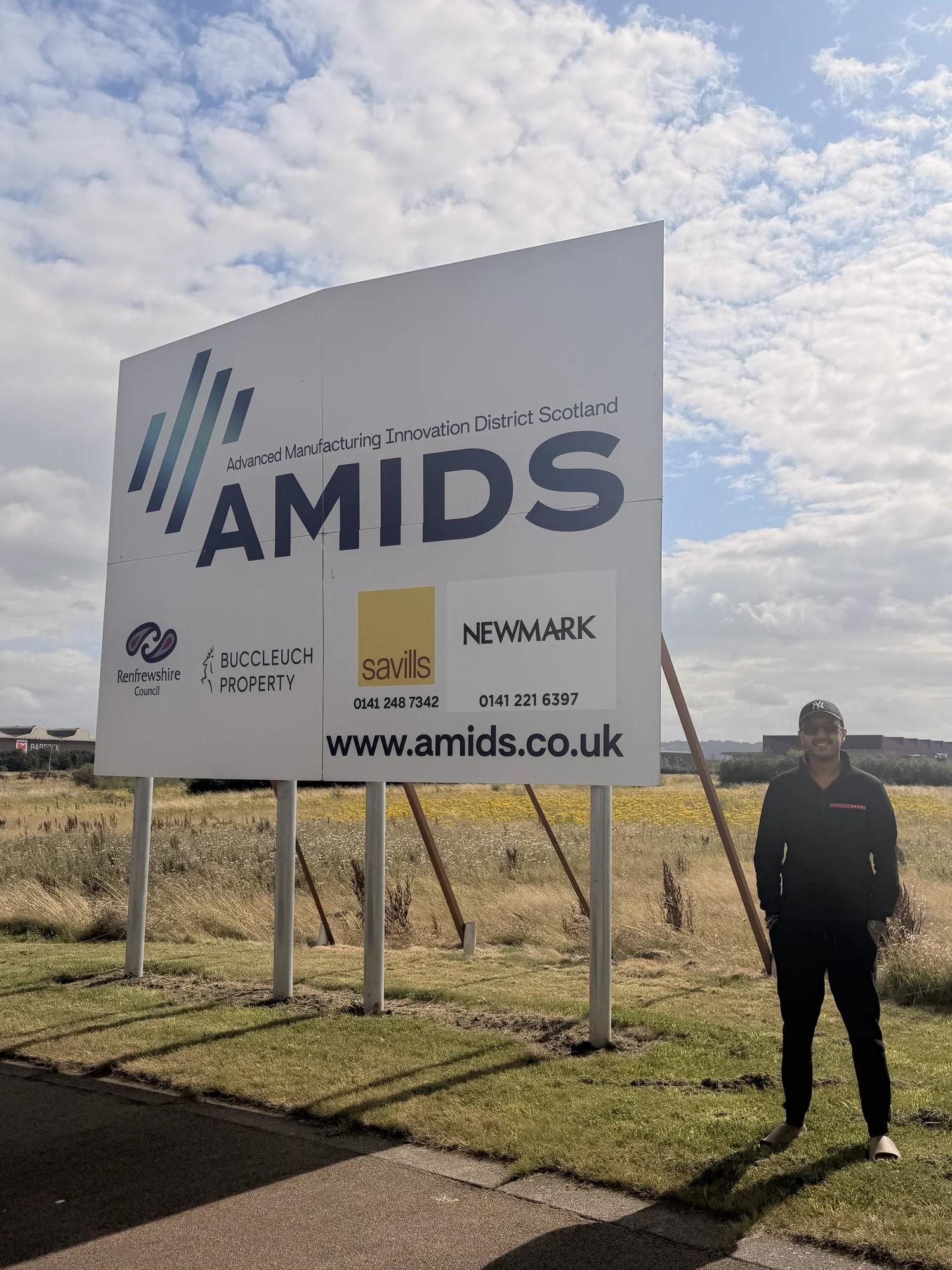
VARUNÉ Labs founder Varun Sharma visited the wider AMIDS area beside Glasgow Airport on 1 August 2026 as part of early location diligence for the proposed Scottish campus.
The purpose was to add direct observation of the wider location to the existing desk-based review. The visit does not establish access to a specific parcel, a formal site inspection, a meeting, a relationship or any permission to develop.
What the visit can establish
A visit to the wider area can help test whether public descriptions and early assumptions merit deeper investigation. It can add direct context concerning the character of the district, surrounding uses and the questions that should be taken into formal diligence.
What the visit cannot establish
Observation from the wider area cannot verify parcel availability, ownership, title, ground conditions, planning fit, aviation safeguarding, utilities, drainage, trade effluent, environmental constraints, access rights, commercial terms or development cost.
Those matters require information from authorised sources, appropriate professional review and a clearly identified parcel. A photograph beside a district sign is evidence of presence in the wider area only.
Why the corridor remains under review
Renfrewshire Council describes AMIDS as an advanced manufacturing district between Renfrew and Inchinnan beside Glasgow Airport. It identifies the National Manufacturing Institute Scotland and the Medicines Manufacturing Innovation Centre as existing anchors.
That official context supports continued investigation of the corridor. It does not establish access, affiliation, endorsement, available land or suitability for the proposed VARUNÉ Labs campus.
The next evidence required
- Identify genuinely available parcels and the parties authorised to discuss them.
- Verify ownership, title constraints and a financeable route to control.
- Test planning, aviation, environmental, access and operational requirements.
- Verify electricity, water, drainage, trade effluent, fibre, gases and reinforcement requirements.
- Prepare a preliminary test fit, delivery sequence and cost plan.
- Assess operating responsibility, demand, commercial structure and finance before any fixed commitment.
A visit is an input, not a milestone claim
The relevant next milestone remains a controlled evidence pack that can support a decision to advance, change scope, reset the location case or stop. Public updates will continue to distinguish observation from access, discussion from agreement and concept from delivery.