How Medicines Development Works | VARUNÉ Labs

Proposed scientific model

How an ingredient could become a repeatable medicine product.

Medicines development connects formulation, measurement, relevant evidence, process understanding and quality oversight through many controlled decisions. This page explains that journey without claiming that VARUNÉ Labs owns a medicine or operates the proposed campus.

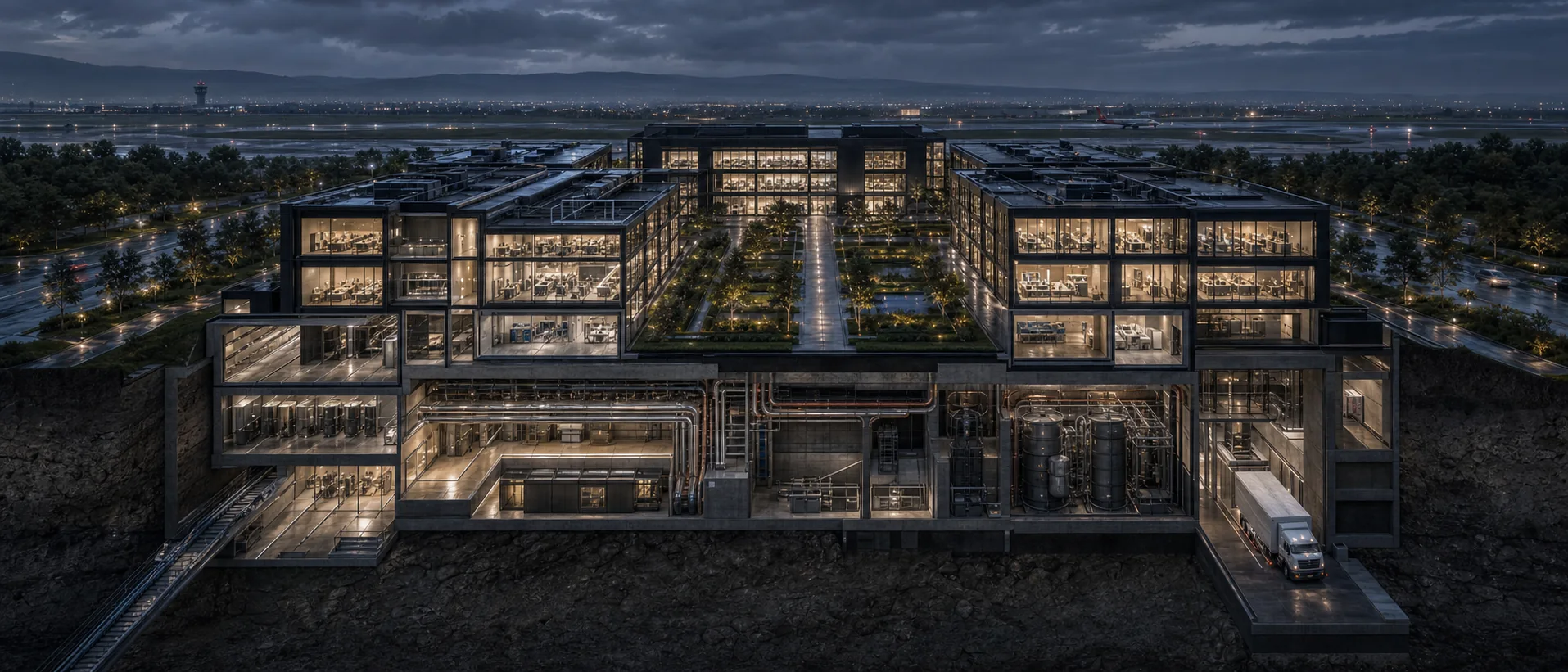
Illustrative sectional view connecting proposed laboratories, utilities, data systems, logistics and public learning spaces
Illustrative concept visualActive predevelopmentProposed, not built

Science made visible

The campus is a chain of questions and controls.

Illustrative environments make the proposed workflow visible. They do not represent installed equipment, active experiments or an operating laboratory.

Illustrative concept. Proposed campus systems shown for explanation only. No facility, utility, laboratory, service or public programme is represented as operating.

Two ways to read this

Scientific depth with a clear practical meaning.

For scientific readers

A medicine product is an evidence system, not a single experiment.

A development route could connect a target product profile, material and formulation knowledge, analytical procedures, relevant models, process understanding, control strategy and life-cycle governance.

The exact route would depend on product type, intended use, risk and applicable regulation. Laboratory evidence would not establish clinical safety, efficacy, approval or supply.

In plain English

Every stage asks a different question.

Formulation asks how the ingredient might become a usable product. Analytical science asks how it can be measured. Translational work asks whether laboratory evidence is relevant. Manufacturing development asks whether the process can be repeated.

Quality and data systems preserve what happened, what remains uncertain and who made the decision.

Illustrative proposed activities

A simple journey through proposed medicines development.

The sequence is illustrative. Real products can follow different routes and require specialist work outside the campus.

  1. 01

    Define the need

    A team could state the intended use, current comparator, patient or user need and the evidence required to justify development.

  2. 02

    Design the product

    Materials and formulation options could be compared against route, dose, stability, use and later manufacturing needs.

  3. 03

    Develop the measurements

    Analytical procedures could be developed to understand identity, strength, purity, performance or another relevant attribute.

  4. 04

    Test relevance

    Suitable models and controlled studies could challenge whether the observed signal is meaningful enough to justify further work.

  5. 05

    Understand the process

    Scientists and engineers could examine how materials, equipment and operating conditions affect the intended product.

  6. 06

    Govern evidence and change

    Records, review, deviations, changes, responsibilities and access could remain connected throughout the product life cycle.

Potential value

Give Scotland a clearer route from scientific idea to responsible decision.

If the campus advances and attracts real programmes, qualified organisations and sustained demand, it could help ideas become easier to test, transfer and assess. Community and economic value would still depend on funded activity, accessible training, fair procurement and credible operations.

What must be true

  • Controlled rights and evidence for a defined product opportunity.
  • Qualified organisations for specialist and regulated work.
  • A suitable site, utilities, permissions, operating model and finance.
  • Real demand, safe access, accountable leadership and public trust.

Activation gates

Evidence must unlock the next step.

NeedProduct conceptDecision evidenceProcess routeAccountable approval

At every stage the correct decision may be to gather better evidence, change the design, use an external specialist, pause or stop. Progress would be a documented state change, not a story.

Current boundary

Concept is not capability.

The proposed campus is not open. VARUNÉ Labs does not currently treat patients, accept samples, manufacture products, provide laboratory services, offer training places or operate the buildings described on this website.